Paying us is easy. You can use Zelle, Venmo, Cash App, cheques, or any major credit card.
We give price breaks to veterans and seniors who are 65 or older. It is our way of saying thanks.
This company is run by a veteran. We bring that same discipline and honesty to every job we do.
We have worked with concrete for over twenty years. That means we know what works and what lasts.
Houston Area Concrete LLC fixes up your place. We do driveways, patios, parking lots- whatever you need. We use good concrete that holds up. Our team pays attention to how things sit and level out. We make sure the mix is right, and the finish is smooth. We ensure that everything is up to the mark.
We do all kinds of jobs. That includes home driveways, decorative patios, big commercial parking lots, and even tearing out old concrete. When you hire us, you get an honest group of people who work hard and show up when they say they will. We are open Monday through Saturday from 8:00 AM to 5:00 PM. Paying is simple too. We take Zelle, Venmo, cards, cash, and cheques. That way, your project goes smoothly and stress-free.
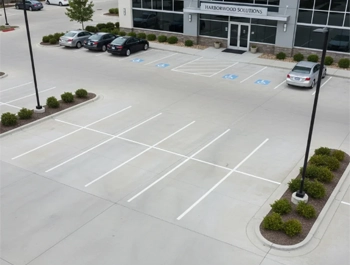
A commercial parking area is not simply a large slab with painted spaces. It has to manage vehicle movement, turning, loading, drainage, pedestrian access, and repeated daily use while fitting the property around it. Houston Area Concrete LLC provides concrete parking lots in Baytown, TX, for commercial properties that need a new parking area, an expanded layout, targeted repair, or replacement of deteriorated pavement.
The right project begins by understanding how the lot will actually function after construction—not by choosing concrete thickness in isolation.
The most useful starting point is traffic flow. A small office lot, retail property, warehouse, church, multifamily site, and service business can place very different demands on pavement even when the total paved area is similar.
Before concrete parking lot construction begins, the layout should account for vehicle entrances and exits, parking-space arrangement, turning movements, delivery routes, dumpster access, pedestrian paths, drainage direction, and connections to adjacent paving. Areas that regularly receive heavier vehicles may need different planning from spaces used mainly by passenger cars.
This is why a parking lot proposal should describe more than total square footage. The site has to work as one system. A well-planned drive aisle that connects poorly to the entrance can still create operational problems. Likewise, a strong slab cannot compensate for a layout that sends runoff where it should not go.
Commercial property owners should also confirm applicable permitting, accessibility, drainage, fire access, site plan, and local development requirements before construction. Those requirements can influence the layout and scope, so they are better addressed during planning than after forms are set.
Much of the performance of commercial concrete parking lots depends on work customers never see once the project is complete. The subgrade is the natural or prepared soil supporting the pavement system.
If weak or inconsistent material is left in place, portions of the lot may respond differently under traffic. Preparation can involve excavation, grading, compaction, and correction of unsuitable areas based on site conditions.
Above that, the base and concrete pavement must be planned for the expected use. Concrete thickness, reinforcement approach, joint layout, and edge conditions are project decisions rather than universal numbers. A passenger-vehicle bay and a route used by delivery trucks should not automatically be treated as identical loading conditions.
Drainage belongs in the same conversation. Parking lots cover large areas, so small elevation decisions can affect where rainwater travels. The finished grades should coordinate with drains, curbs, gutters, adjacent pavement, buildings, sidewalks, and landscaped areas. These are core parts of parking lot concrete services, even though they are less visible than the finished texture or striping.
A new concrete parking lot installation offers the greatest opportunity to coordinate pavement with the rest of the property. That is especially useful on new commercial sites or expansions where circulation, entrances, walks, loading areas, and building access are being planned together.
A typical project sequence may include:
Actual sequencing varies by site. Access limitations, ongoing business operations, weather, utilities, drainage work, and the size of the lot can all affect how construction is phased.
For occupied properties, phasing deserves special attention. Closing an entire parking area may not be practical. Dividing the work into sections can preserve some access, but it also requires careful coordination so customers, employees, deliveries, and construction traffic do not compete for the same space.
Not every deteriorated lot needs to be removed from edge to edge. The right response depends on the pattern and cause of the damage. Concrete parking lot repair may be appropriate when distress is localized and the surrounding pavement remains serviceable. Individual panels or smaller areas can sometimes be addressed without rebuilding the entire parking lot.
Concrete parking lot replacement becomes more relevant when problems are widespread, settlement affects multiple areas, pavement has extensive deterioration, drainage needs to be corrected, or the existing layout no longer supports current operations.
A partial replacement can fall between those two choices. High-use drive lanes, loading zones, entrances, or heavily damaged sections may need reconstruction while lower-stress areas remain in place.
The key question is whether the proposed work treats the cause or only the visible symptom. Replacing surface damage without addressing support, drainage, or repeated heavy loading may leave the same underlying issue unresolved.
The phrase "concrete parking lot paving" can make the job sound uniform, but commercial sites rarely use every square foot in the same way.
Consider a property where passenger vehicles occupy most spaces but delivery trucks cross one side of the lot every day. The truck route may experience different stresses from the parking stalls. Likewise, dumpster approaches, loading areas, turning zones, entrance aprons, and concrete driveway and drive lanes can receive concentrated use.
That does not automatically mean every zone requires a different pavement design. It means the contractor and property owner should identify demanding areas before the project is priced and built.
This operational review is particularly important when an existing business has changed over time. A lot designed for one type of tenant may now support heavier deliveries, more traffic, or different circulation. Replacement work provides an opportunity to correct those mismatches instead of duplicating the old configuration.
When evaluating concrete parking lot contractors, compare scopes before comparing bottom-line prices. Two proposals can appear to describe the same parking lot while including very different assumptions.
Ask each contractor to clarify:
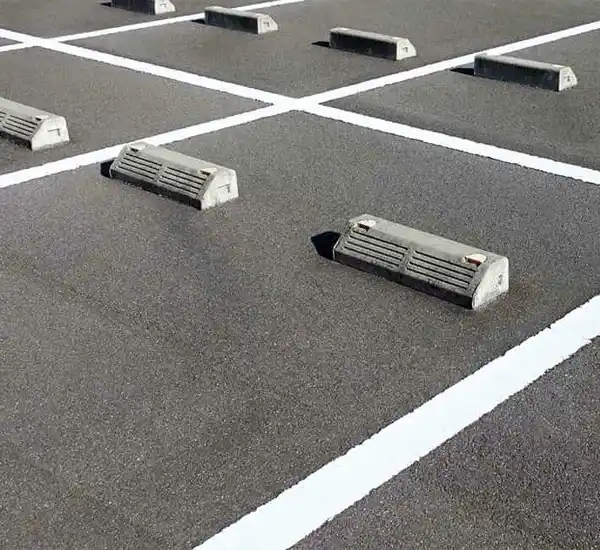
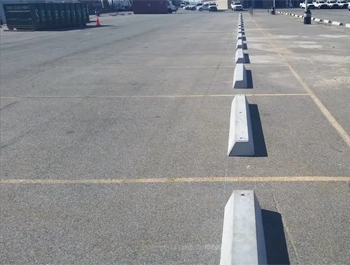
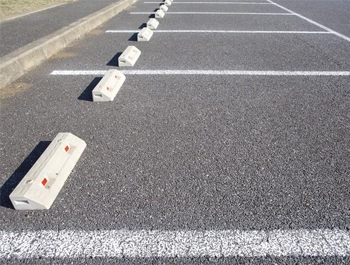
Clear exclusions matter as much as clear inclusions. Striping, wheel stops, drainage structures, traffic control, permits, engineering, testing, or landscaping restoration may or may not be part of a particular scope.
If you are searching for a parking lot installation company, request enough detail to understand what you are buying. A simple price per square foot can be useful for early budgeting, but it cannot describe every condition that affects a commercial project.
There is no responsible single-number answer for concrete parking lot installation cost without knowing the site. Cost is shaped by the work required to create the finished pavement, not only by the quantity of concrete.
Major cost drivers can include the total paved area, demolition, haul-off, excavation, access for equipment, base correction, pavement design, reinforcement, drainage work, curbs, transitions, specialty areas, project phasing, and the complexity of maintaining access around an operating property.
Large projects can sometimes gain efficiency from repeated production, while complicated small sites may require more labor per square foot because equipment movement and staging are restricted. Replacement can also carry different costs from new construction because existing material must be removed and underlying conditions may not be fully visible until concrete demolition begins.
For owners seeking an accurate budget, a defined scope is more useful than an isolated unit price.
Houston Area Concrete LLC brings 20+ years of experience and is a veteran-owned business. Business hours are Monday through Saturday, 8:00 AM to 5:00 PM. A veteran discount is available, along with a discount for senior citizens over 65 years. Payment can be made by Zelle, check, cash, Venmo, Cash App, or credit and debit cards.
For property owners evaluating concrete parking lots in Baytown, TX, the next step is to define what the site needs: new pavement, expansion, repair, partial reconstruction, or full replacement. Houston Area Concrete LLC can discuss the parking area in the context of vehicle use, site conditions, drainage, access, and the scope required to move the project forward.
Concrete can be a practical parking-lot material when the pavement system is designed and built for the site's traffic, support conditions, drainage, and operational needs. The material choice should be evaluated alongside installation requirements and long-term use rather than on appearance alone.
Sometimes work can be phased so portions of a property remain accessible, but feasibility depends on entrances, circulation, project size, safety, and how the business operates. Phasing should be planned before construction rather than improvised after work begins.
In some situations, yes. Localized panel replacement may be appropriate where surrounding pavement remains suitable. Widespread settlement, repeated damage, or broader drainage problems may point toward a larger reconstruction scope.
Gather any existing site plans you have, identify known drainage or pavement problems, note areas used by heavy vehicles, and decide whether the property must remain partially open during construction. Clear information helps contractors develop a more relevant scope.
Want a tough, good-looking new driveway put in? Give us a call today.
Need a strong commercial lot or a nice patio out back? Pick us to do the job.
Want decorative concrete finishes or strong new steps? Reach out to us today.
Got old concrete you need torn out and hauled off? Contact us, and we will handle it.
.png)